
Services
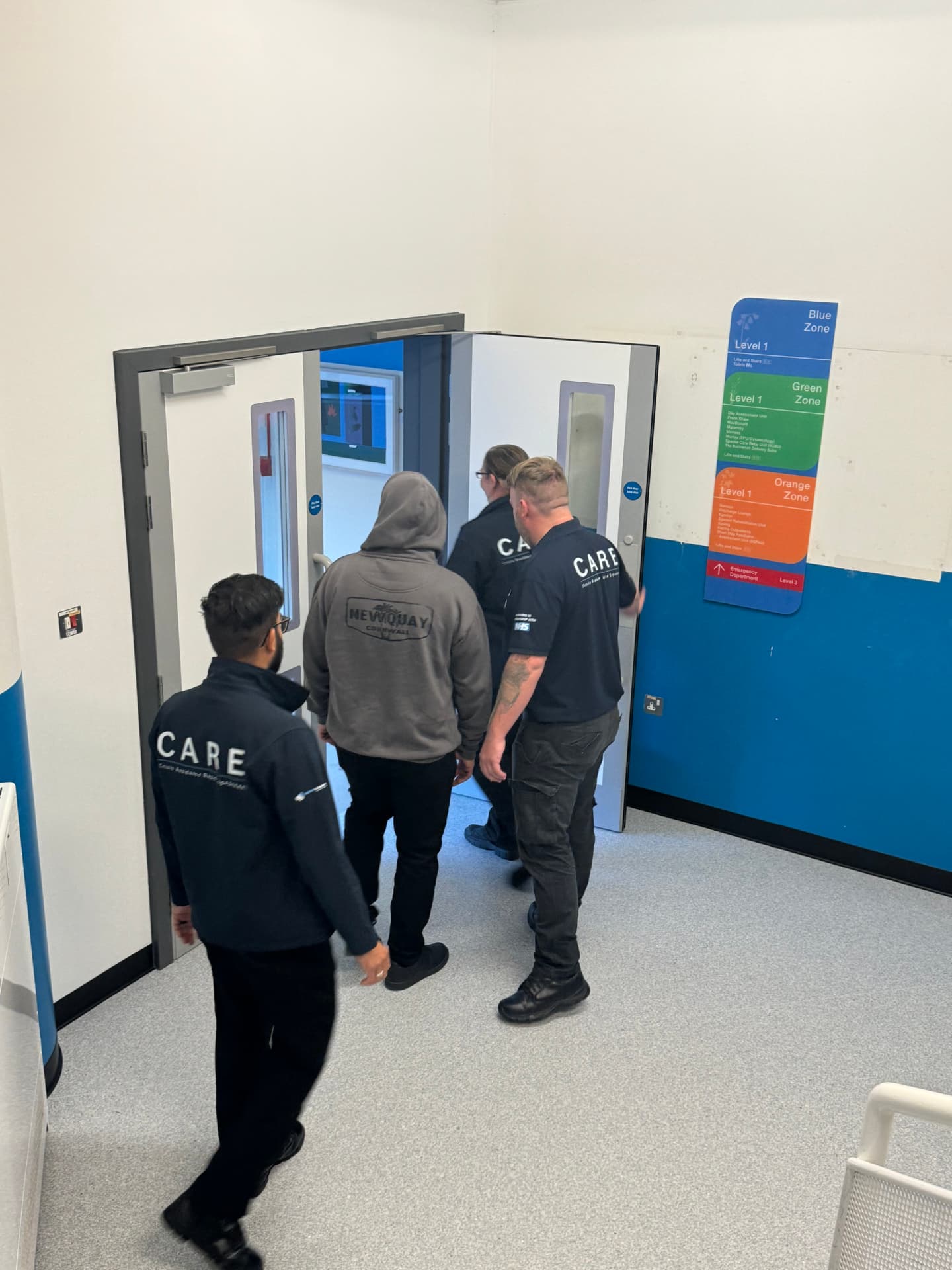
Practical support, built around your patient.
1 / 07
Welfare checks
Trained teams attend to check on the wellbeing of a person of concern, alongside partner agencies where needed.
Book this serviceWhen should you call CARE?
Illustrative referrals. Each booking is assessed individually.
1
A patient in A&E needs more
While the clinical team arranges the next stage of care, the patient needs sustained engagement and prescribed observations. CARE provides the agreed support team, records observations and escalates changes. Your clinical team retains assessment, treatment and legal decisions.
2
The ward needs overnight cover
An inpatient needs additional support the existing ward team cannot absorb. Agree staff, hours, break cover and handover. CARE supports the person within the ward care plan; the clinical team reviews the ongoing need.
Why CARE for patient support?
CARE
Support for your patient
- Engagement and de-escalation
- Agreed observations and records
- A team lead and control contact
- Planned relief and documented handover
Agency staffing
A rostered skill gap
- An HCA, RMN or other professional fills the agreed rostered role
- Local tasking and supervision
- Transport arranged separately
Hospital security
Protection and security
- Protects people and premises
- Manages access and security incidents
- Can work alongside CARE when security support is also needed
Compare the actual specification. NHS guidance supports skilled observation provision, alongside security where violence creates additional risk (NHS England: Right Care, Right Person, 4.2.2).
Need cover now?
Urgent or planned — control confirms ETA and quote.
Planned cover?
Send the details online — control replies with ETA and quote.